
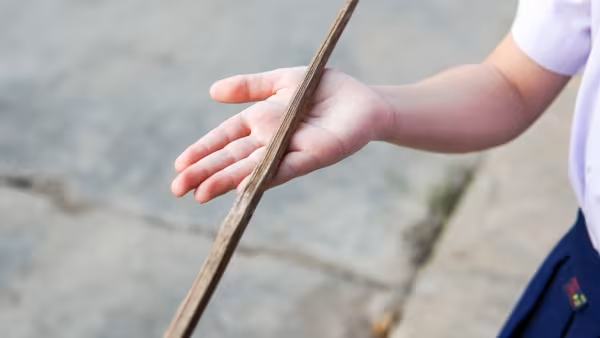


NEW DELHI – A policy update in Singapore has reignited a fierce global conversation regarding corporal punishment in schools. Singapore recently reinforced guidelines allowing the caning of male students as a “last resort” for serious offenses like cyberbullying. This stands in stark contrast to the global shift toward child rights and India’s own legal prohibitions.
The Singapore Model: Discipline through Deterrence
In Singapore, caning is a legacy of British colonial rule that remains deeply embedded in the judicial and educational systems.
- The Rule: Under new anti-bullying guidelines, male students can receive a maximum of three strokes of the cane, administered under strict supervision.
- The Logic: Authorities argue that physical discipline serves as a necessary deterrent against rising cases of bullying and maintains classroom order.
- Gender Gap: Female students are exempt from caning, following the nation’s Criminal Procedure Code.
The Indian Context: Law vs. Reality
India took a firm stance against physical discipline over a decade ago, yet implementation remains a challenge.
- The Legal Ban: The Right of Children to Free and Compulsory Education (RTE) Act, 2009, strictly prohibits physical punishment and mental harassment in all schools and child care institutions.
- The Reality: Despite the law, reports of extreme corporal punishment continue to emerge. Recent incidents include a student in Andhra Pradesh beaten for homework and a Class 5 student in Shimla stripped and beaten for alleged theft.
- The Conflict: Many parents in India still harbor a “strictness is necessary” mindset, often clashing with the modern understanding of child psychology and trauma.
Why the Shift Away from Physical Punishment?
International bodies like UNICEF and the UN Committee on the Rights of the Child warn that corporal punishment:
- Triggers Physiological Stress: Children exhibit high hormonal reactivity and live in a state of perceived threat.
- Damages Mental Health: It is linked to long-term anxiety, school avoidance, and aggressive behavior.
- Violates Dignity: Modern standards view physical force as a violation of a child’s fundamental right to safety and dignity.
Modern Alternatives
Education systems globally are increasingly moving toward Restorative Justice. Instead of pain-based discipline, schools are adopting:
- Peer Mediation: Students resolve conflicts through guided dialogue.
- Counseling & Therapy: Addressing the root cause of “bad behavior,” such as home instability or neurodivergence.
- Accountability Models: Teaching empathy and making amends rather than enduring physical pain.