
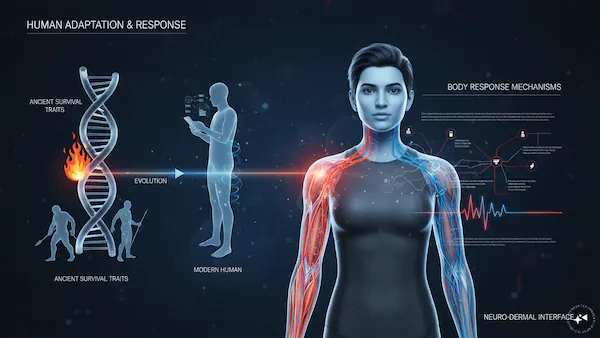


Goosebumps are a common physical reaction that can appear when you feel cold, frightened, excited or deeply moved. Known scientifically as piloerection, this response occurs when tiny muscles attached to hair follicles contract, causing hairs to stand upright and creating small bumps on the skin.
A Natural Response To Cold
One of the most common triggers for goosebumps is exposure to cold temperatures. When the body senses a drop in temperature, the muscles surrounding hair follicles contract, making body hair stand up. In our furry ancestors, this helped trap a layer of warm air close to the skin, providing better insulation against the cold.
An Evolutionary Survival Mechanism
Scientists believe goosebumps are an evolutionary remnant inherited from our ancestors. In animals with thick fur, raised hair not only helped retain body heat but also made them appear larger and more intimidating when confronted by predators or threats.
Strong Emotions Can Trigger Goosebumps
Goosebumps are not limited to cold weather. Powerful emotions such as fear, excitement, awe, happiness or sadness can also activate this response. Listening to moving music, watching an emotional film scene or witnessing an inspiring moment may lead to what researchers describe as emotional chills.
Controlled By The Nervous System
The body’s autonomic nervous system regulates goosebumps without conscious control. When it detects cold temperatures or intense emotions, nerve signals stimulate tiny muscles around hair follicles, producing the familiar raised bumps on the skin.
Part Of The Fight-Or-Flight Response
During moments of fear or sudden danger, the body releases stress hormones such as adrenaline. This activates the fight-or-flight response, increasing heart rate, sharpening alertness and often causing goosebumps as part of the body’s automatic reaction.
Weather Changes Can Also Play A Role
Sudden shifts in temperature, cool winds and rainy weather can also trigger goosebumps. During the monsoon season, for example, cooler air and unexpected rain showers may prompt this natural response as the body adapts to changing environmental conditions.
Although goosebumps no longer serve the same purpose they did for our ancestors, they remain a fascinating reminder of how the human body continues to respond to both physical and emotional stimuli.