
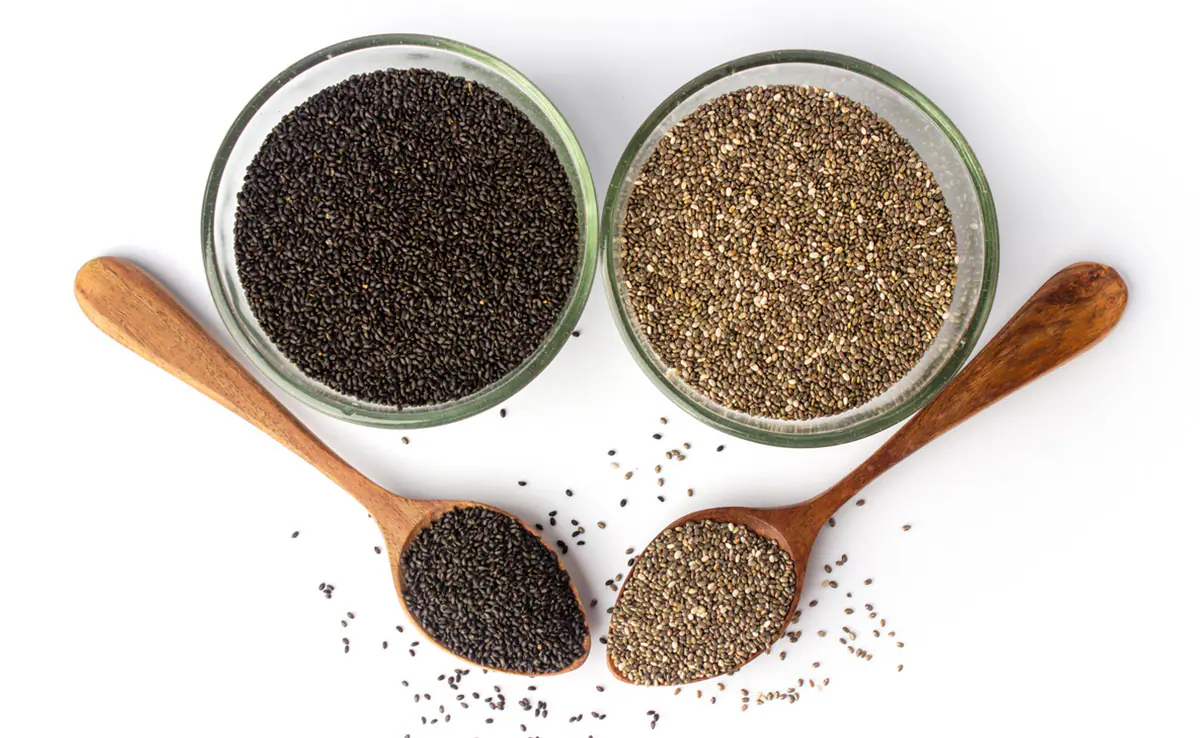


Chia seeds and sabja seeds, also known as basil seeds, are popular superfoods that are often confused because both expand when soaked in water and are rich in nutrients. Despite their similar appearance, the two differ in their origin, nutritional profile, texture and health benefits.
Chia seeds are obtained from the Salvia hispanica plant, native to Central America, while sabja seeds come from the sweet basil (Ocimum basilicum) plant, which is widely cultivated across India and Southeast Asia.
In terms of appearance, chia seeds are grey, black or white with a speckled pattern and require around three to four hours of soaking before they fully absorb water. Sabja seeds are smaller, jet black in colour and swell much faster, becoming translucent with a white coating within 10 to 15 minutes.
Chia seeds have a mild, nutty flavour and a slightly chewy texture, making them a popular addition to smoothies, yogurt, oatmeal, puddings and baked dishes. Sabja seeds are almost flavourless with a soft, jelly-like consistency, making them a favourite ingredient in falooda, lemonades, sherbets, milkshakes and other refreshing summer beverages.
Nutritionally, both seeds are excellent sources of dietary fibre, which supports digestion and helps promote fullness. However, chia seeds contain higher levels of protein, omega-3 fatty acids and calcium, giving them an advantage for those looking to increase their nutrient intake. Sabja seeds, on the other hand, are valued for their cooling properties and are commonly consumed to aid digestion, improve hydration and help relieve acidity during hot weather.
When it comes to weight management, both chia and sabja seeds can be beneficial due to their high fibre content, which helps curb hunger and reduce overeating. Chia seeds may offer a slight advantage because their higher protein content can enhance satiety and support muscle maintenance as part of a balanced diet.
Ultimately, both seeds can be healthy additions to daily meals. Choosing between them depends on individual dietary preferences, nutritional goals and the type of recipes they are being used in.